

Cage valve Manufacturer in China
The throttle window design of the sleeve in the cage valve not only provides the valve with precise flow characteristics but also effectively prevents fluid flashing and cavitation through a multi-stage pressure reduction structure, thereby reducing system noise.
various types of Our cage valve
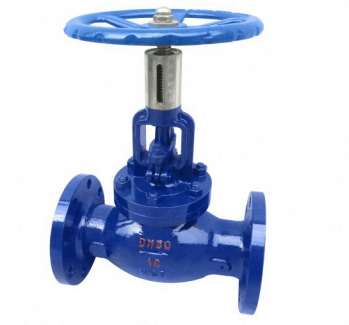
The Dalian Manual Control Valve can be closed by rotating the handwheel clockwise. At this point, the valve stem drives the valve disc downward until the two conical sealing surfaces come into contact, achieving a complete and leak-tight closure of the pipeline. The manual control valves produced by our factory are energy-saving products suitable for sound-bar centralized heating and district heating systems, primarily used for flow regulation.
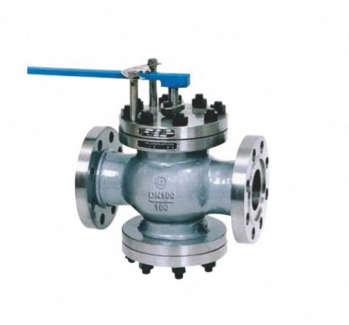
The Feed Water Rotary Control Valve consists of components such as the valve body, valve seat, valve disc, valve stem, and valve cover. It is installed on pipelines carrying oil, water, etc., and regulates flow by rotating a cylindrical valve plug to alter the size of the opening formed between the valve disc and seat, thereby adjusting the area of the window created by the valve disc and seat, thus achieving flow regulation. The opening/closing angle of the control valve is 60 degrees, indicated by an opening indicator plate installed above the valve.Medium temperature: 0~170°C.
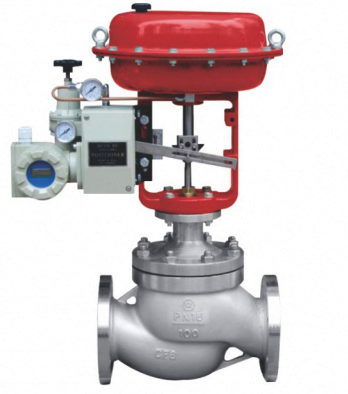
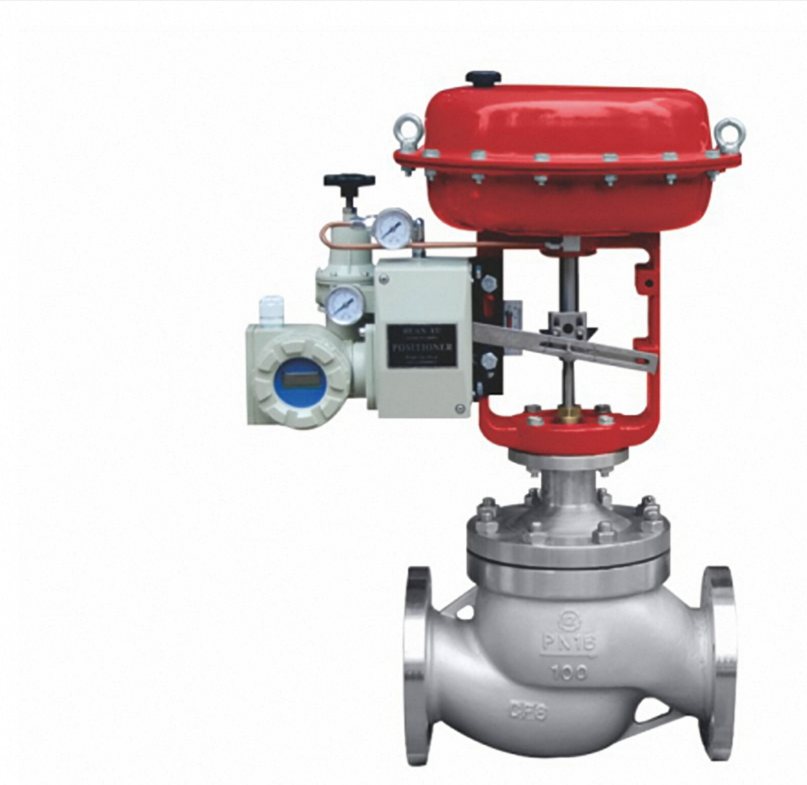
The cage valve is a top-guided control valve, featuring a “5”-shaped streamlined fluid passage that delivers low pressure drop loss, large flow rate, wide adjustable range, high precision of flow characteristic curve, large spool guiding area and excellent vibration resistance. Equipped with a multi-spring pneumatic diaphragm actuator or electric actuator, it boasts the advantages of small size, light weight, large output force and convenient installation, and can be applied to control fluids under various pressures and temperatures.
Application Scenarios of cage valve

Change your process and a conventional control valve gets replaced. Our Longz control valve does not: the bonnet clamps a cage into the body, and that cage is the whole trim — its window contour sets your flow characteristic, its window area sets your Cv. Swap the cage and you re-trim the valve without disturbing body or line. The cage also guides the plug the full length of travel, holding it steady at small openings.
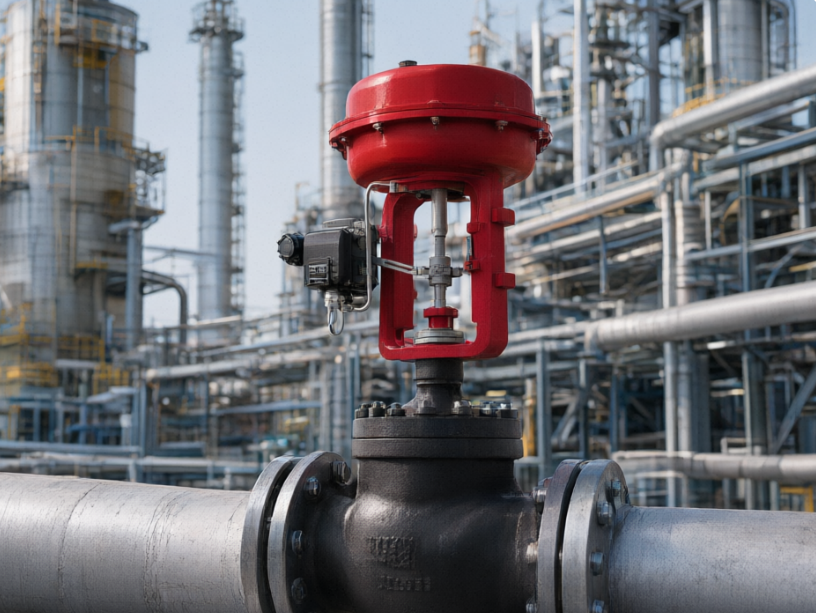
The plug rides inside the cage on a guiding clearance — it seals at the seat, never against the cage bore. Our Longz cage valve runs a balanced plug: a port through it equalises pressure above and below, so line pressure stops forcing the plug onto the seat. What that removes is actuator thrust — on a large valve at high differential, the difference between a big actuator and a small one.
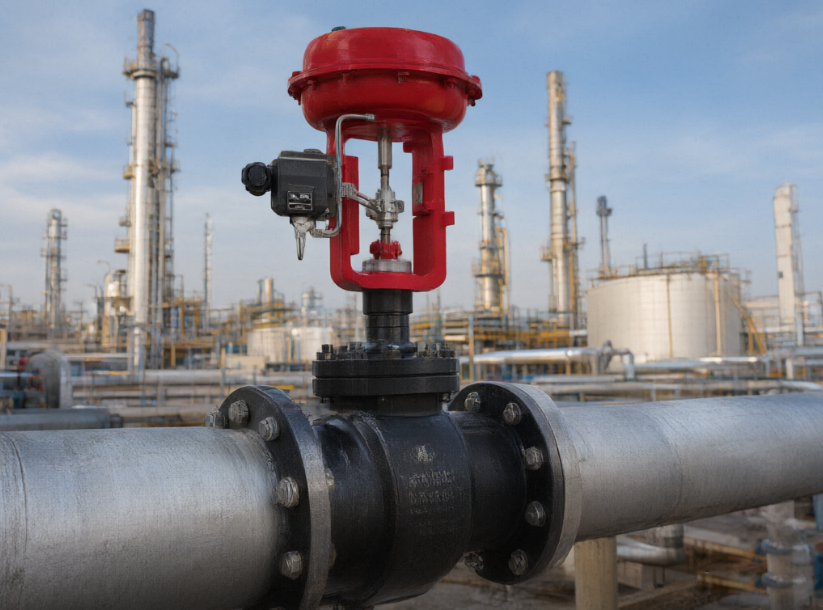
The actuator lifts the plug inside the cage, and the cage window does the rest: as the plug rises, more of that window opens to flow, so flow area tracks stroke. Closing is a separate action — the plug lands on the seat only at the end of travel. Our Longz cage valve stops at the seat, not before it, which is what keeps your shut-off class where you specified it

Unbalanced force on a plug is roughly area times differential pressure — and on a large bore at high , that can exceed what any sensible actuator can hold. Our Longz cage valve runs a balanced plug: a port through it equalises pressure above and below, so line pressure stops driving the plug onto the seat. What gets smaller is your actuator, not your valve — lighter, less air per stroke, less mounting height. Body size still follows your pressure class and bore.
Automatic pressure relief structure of cage valve
At small openings a plug on a short guide is at the mercy of the flow: it chatters, and chatter cuts the seat. Our Longz cage valve guides the plug the full length of the cage bore — on a working clearance, not a large contact area — so the plug stays centred through the stroke instead of only at the seat. Steady throttling at low openings, less seat wear, and no chatter to chase in your loop tuning.
Your Trusted cage valve supplier in China

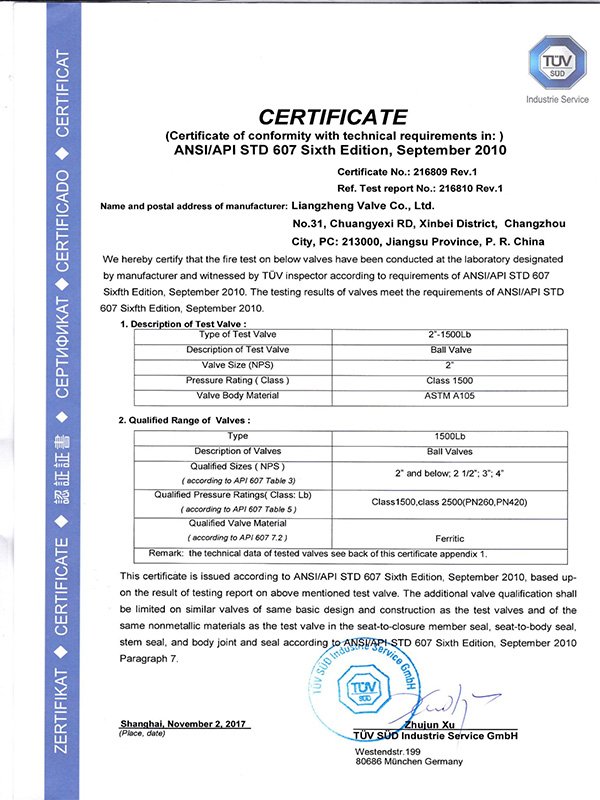
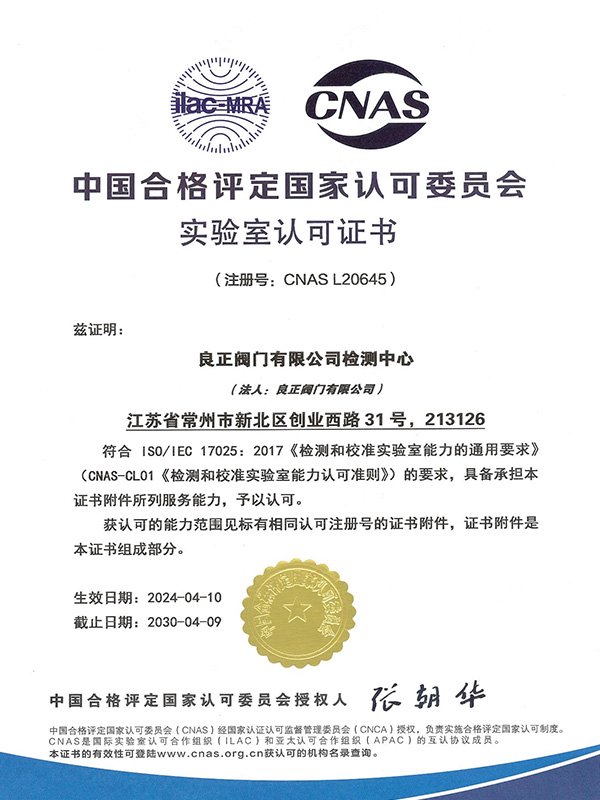
Longz has obtained ISO 9001 international quality management system certification, ISO 14001 environmental management system certification, API certification from the American Petroleum Institute, and other certificates confirming that its products meet domestic and international authoritative quality standards. The company also holds more than 50 invention patents and technology innovation patents.

- certificate
- Dimension Chart for Cage Valve
| DN | L | H | H1 | ΦA | Weight (Kg) | ||||||
|---|---|---|---|---|---|---|---|---|---|---|---|
| PN16 | PN40 | PN64 | ordinary | high temperature | PN16 | PN40 | PN64 | PN16 | PN40 / PN64 | ||
| 25 | 184 | 197 | 210 | 503 | 653 | 57 | 70 | 260 | 15 | 19 | |
| 40 | 222 | 235 | 251 | 648 | 813 | 75 | 85 | 290 | 26 | 35 | |
| 50 | 254 | 267 | 286 | 650 | 820 | 82 | 90 | 30 | 40 | ||
| 65 | 276 | 292 | 311 | 752 | 932 | 92 | 102 | 34 | 53 | ||
| 80 | 298 | 317 | 337 | 764 | 949 | 100 | 107 | 42 | 65 | ||
| 100 | 352 | 368 | 394 | 782 | 992 | 110 | 117 | 125 | 52 | 86 | |
| 150 | 451 | 473 | 508 | 1077 | 1337 | 142 | 150 | 172 | 360 | 152 | 206 |
| 200 | 550 | 610 | 1097 | 1357 | 170 | 187 | 207 | 220 | 280 | ||
| 250 | 673 | 720 | 1240 | 1560 | 202 | 225 | 235 | 423 | 470 | ||
| 300 | 734 | 860 | 1271 | 1591 | 230 | 257 | 265 | 663 | 735 | ||
This cage valve performs exceptionally well in noise reduction and anti-erosion, making it highly suitable for our construction scenarios. Since its commissioning, the equipment has maintained a stable and reliable operation status without any failure issues caused by medium erosion or pressure fluctuations. This not only reduces the frequency of on-site shutdown and maintenance for us, but also lowers the long-term operation and maintenance costs. The supplier’s after-sales response has also been prompt and adequate. It is a reliable product choice.
 Purchasing ManagerFrench Chemical Company
The cage valve is structurally designed in a way that ensures excellent sealing performance. The fit between the valve core and the valve seat is very tight, effectively reducing the risk of medium leakage.
 EngineerSaudi Oil Company
Valve body and valve cover: Pressure-bearing shell, valve seat adopts self-aligning non-threaded snap-in structure, fixed by the valve cover.
Cylinder (cage): With throttling windows, the shape of the windows determines the flow characteristics.
Valve core (valve disc): Intersects with the cylinder in clearance fit, sliding fully within the cylinder.
Valve stem and sealing element: Connects the actuator to transmit displacement, equipped with packing to achieve sealing.
There are mainly three flow characteristics: equal percentage, linear and quick opening. These are achieved by changing the shape or distribution of the throttle window of the sleeve without the need to replace the entire valve internals. Among them, the equal percentage characteristic has good regulation accuracy and is the most commonly used choice in process control.
Convenient. The cage valve adopts a top-mounted modular internal component design. By simply removing the upper valve cover, components such as sleeves, valve cores, and packing, can be directly extracted and replaced without needing to disassemble the entire valve body. This significantly reduces downtime for maintenance.
The actuating mechanism drives the valve stem and valve core of the cage valve to move up and down within the sleeve. As a result, the area of the sleeve’s throttling window covered by the valve core changes, altering the flow passage area, thereby continuously adjusting the flow rate and pressure. The symmetrically distributed balance holes on the valve core of the cage valve connect the upper and lower end chamber cavities, offsetting most of the axial unbalanced force.
The pressure rating of this cage valve ranges from Class 150 to Class 600.
The performance characteristics of the cage valve
Stability and vibration resistance
The cage valve, due to its adoption of sleeve guidance and pressure balance structure, has excellent stability. The contact area between the inner surface of the sleeve and the valve core is large, and the unbalanced force is small, effectively suppressing the valve core vibration and instability caused by fluid flow, and eliminating the unstable zone of the valve. In addition, the existence of the sleeve also plays a damping role, further improving the dynamic stability of the valve.
Noise reduction and anti-erosion
The cage valve performs excellently in noise reduction and anti-erosion. By designing multiple sleeves or porous throttling windows, high pressure drop can be dispersed into multiple low pressure drops, gradually reducing the fluid flow rate, thereby preventing flash vaporization and erosion at the throttling point. The multi-stage pressure reduction structure of the cage valve can effectively control fluid noise, typically reducing noise by about 10 dB compared to ordinary single-seat or double-seat regulating valves.
Interchangeability and maintenance
The cage valve has strong interchangeability. By replacing sleeves of different shapes or hole diameters, the flow characteristics (such as linear or equal percentage) or flow capacity of the valve can be changed conveniently without replacing the entire valve! 。 In addition, the sleeve of the cage valve is fixed by the upper valve cover and is very easy to disassemble and assemble. This makes maintenance and repair very convenient, and it is not necessary to remove the valve body from the pipeline.