
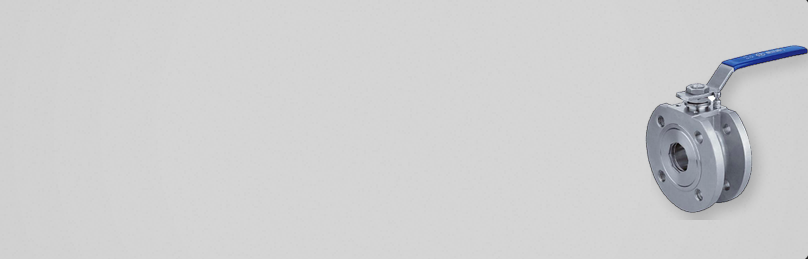
Wafer ball valve Manufacturer in China
You can mount the compact valve body straight between two existing pipe flanges: through-holes and bolt holes let you clamp it in place with long double-headed studs.
The structural length contracts to roughly the width of the ball and valve seat alone. That means lighter lifting for you, easier routing in crowded pipe galleries, and the freedom to work within existing gaps during retrofit — no pipe cutting required.
various types of Our wafer ball valve
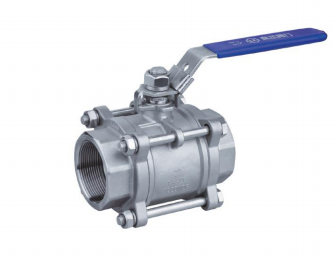
Three-piece ball valves typically adopt a full-bore design, with fluid resistance coefficients comparable to those of pipes of the same length and high flow capacity. It employs high-performance elastic sealing materials or metal seals to ensure sealing performance under high-temperature, high-pressure, or vacuum conditions.
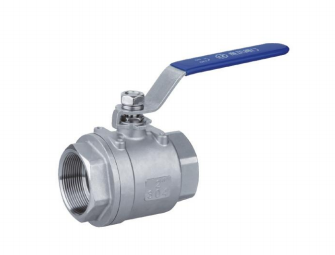
The opening and closing operation of a two-piece ball valve is achieved by rotating the ball. When the handle or actuator is rotated counterclockwise, the valve stem drives the ball to rotate 90 degrees, aligning the through hole on the ball with the flow direction of the pipeline, allowing the medium to pass through; When rotated clockwise to the vertical position, the sphere blocks the flow channel, achieving cutoff.
Automatic pressure relief structure of wafer ball valve
The wafer ball valve is secured between the two flanges of the pipeline itself using long double-headed studs. The valve body does not have flanges; therefore, no components on the valve bear bolt loads, and there are no flanges to increase the rigidity of the housing. This is precisely what makes it compact and lightweight.

Your Trusted wafer ball valve supplier in China
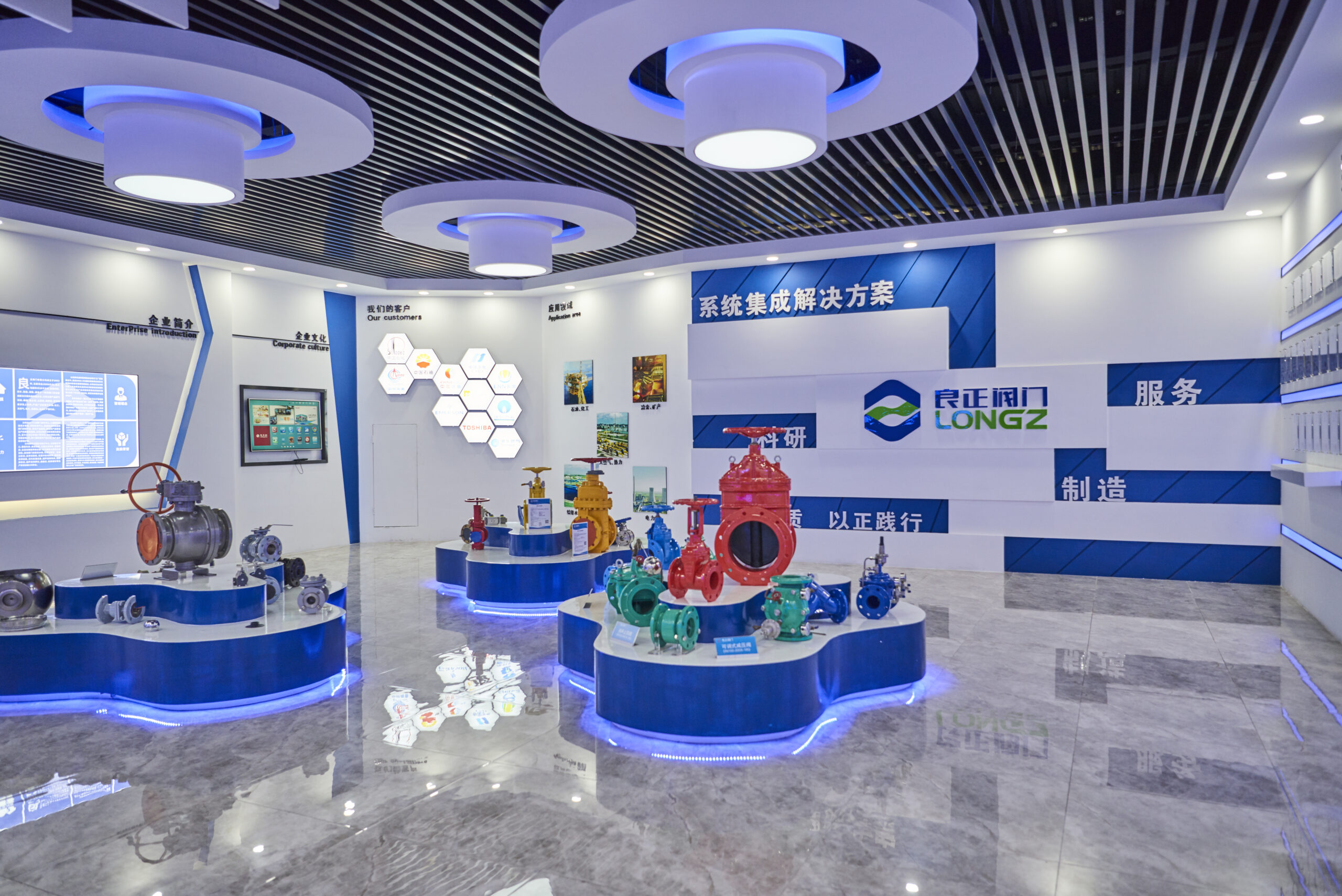

Longz has obtained ISO 9001 international quality management system certification, ISO 14001 environmental management system certification, API certification from the American Petroleum Institute, and other certificates confirming that its products meet domestic and international authoritative quality standards. The company also holds more than 50 invention patents and technology innovation patents.

Our Longz wafer ball valve uses a soft-sealing structure, and you can choose between two polymer seat materials to match your operating conditions.
PTFE is chemically inert against almost all acids, bases and solvents you are likely to handle. It has the lowest friction coefficient of any commonly used seat material, so you get bubble-tight sealing even at low seat pressure ratios — and the actuation torque you need stays small.
Choose PPL where PTFE reaches its limits: it resists cold flow better and holds its strength at higher temperatures, so you can run hotter service or more frequent cycling with confidence.
One caution: abrasive particles can damage soft seals. If your line carries sand or oxide scale, you should either specify a hard-seated version or install a filter upstream of the valve.
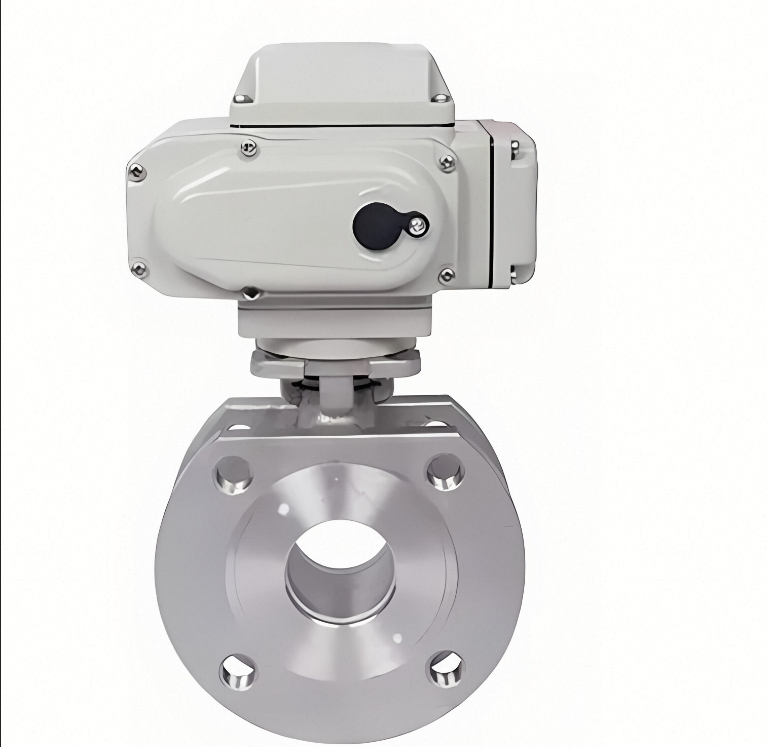
Our Longz wafer ball valve features a soft-sealing structure, offering two polymer seat materials for selection based on different operating conditions. PTFE exhibits chemical inertness against almost all acids, bases, and solvents. It has the lowest friction coefficient among commonly used valve seat materials, enabling bubble-level sealing at low valve seat pressure ratios and offering a small actuation torque. PPL for PTFE becomes limiting in specific aspects: it offers stronger resistance to cold flow and maintains strength at higher temperatures. Soft seals can be damaged by abrasive particles; pipelines containing sand or oxide scales should either select hard seals or install upstream filters.

With no body flanges, the face-to-face dimension shrinks to roughly the width of the ball and its seats, and the weight falls with it — less steel to buy, less to lift, less dead load carried by the pipe rack, and fewer components that can leak.

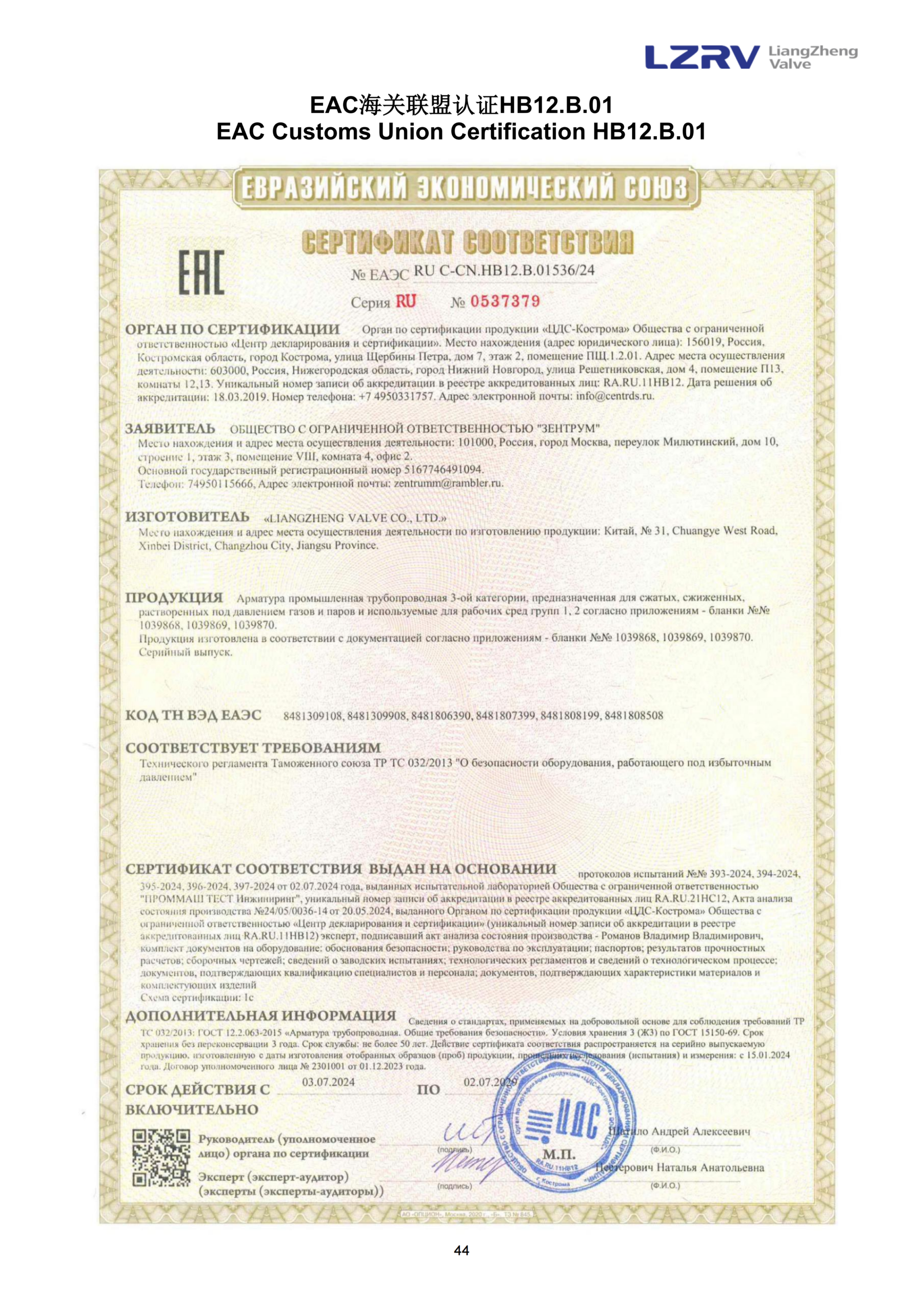
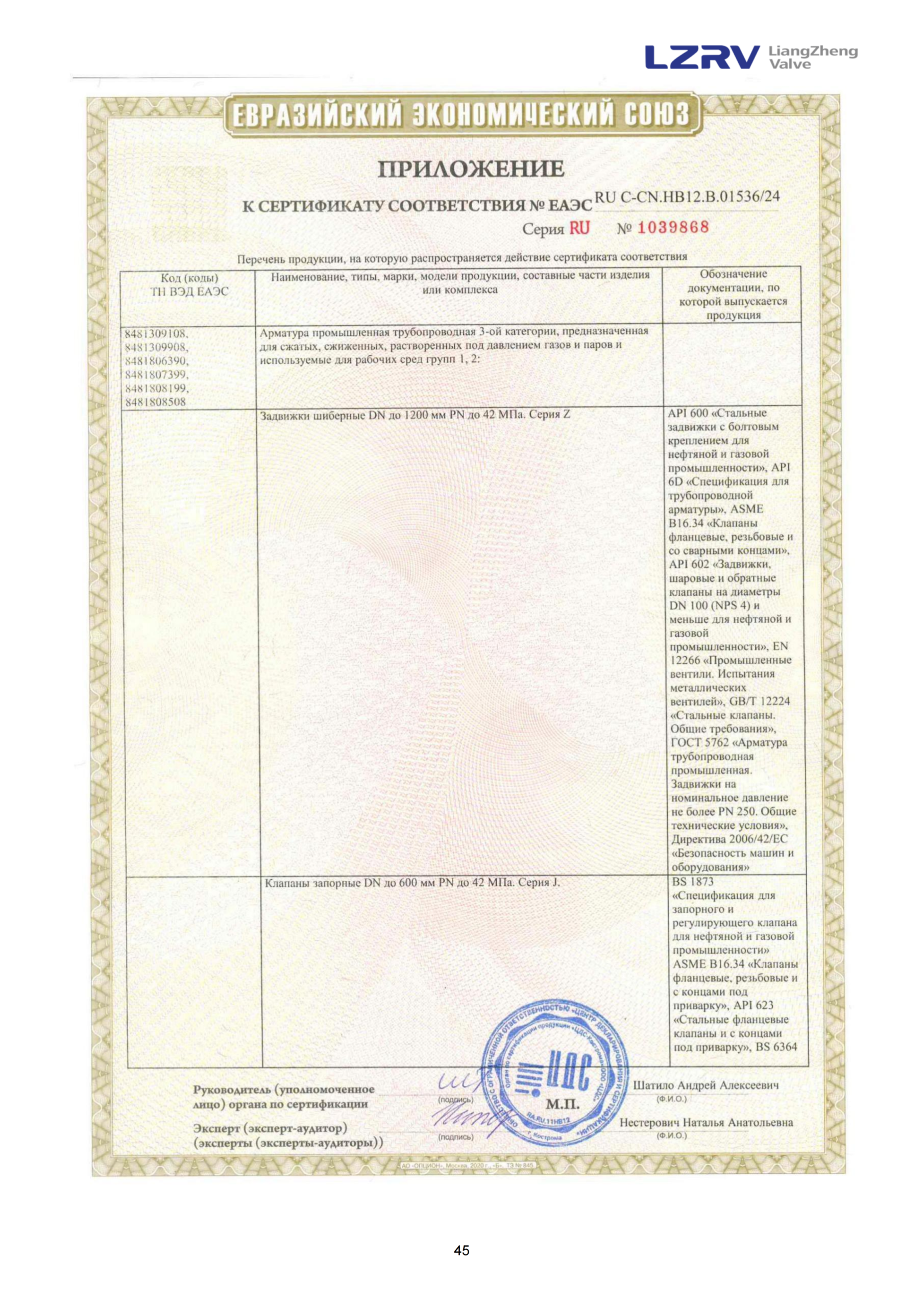
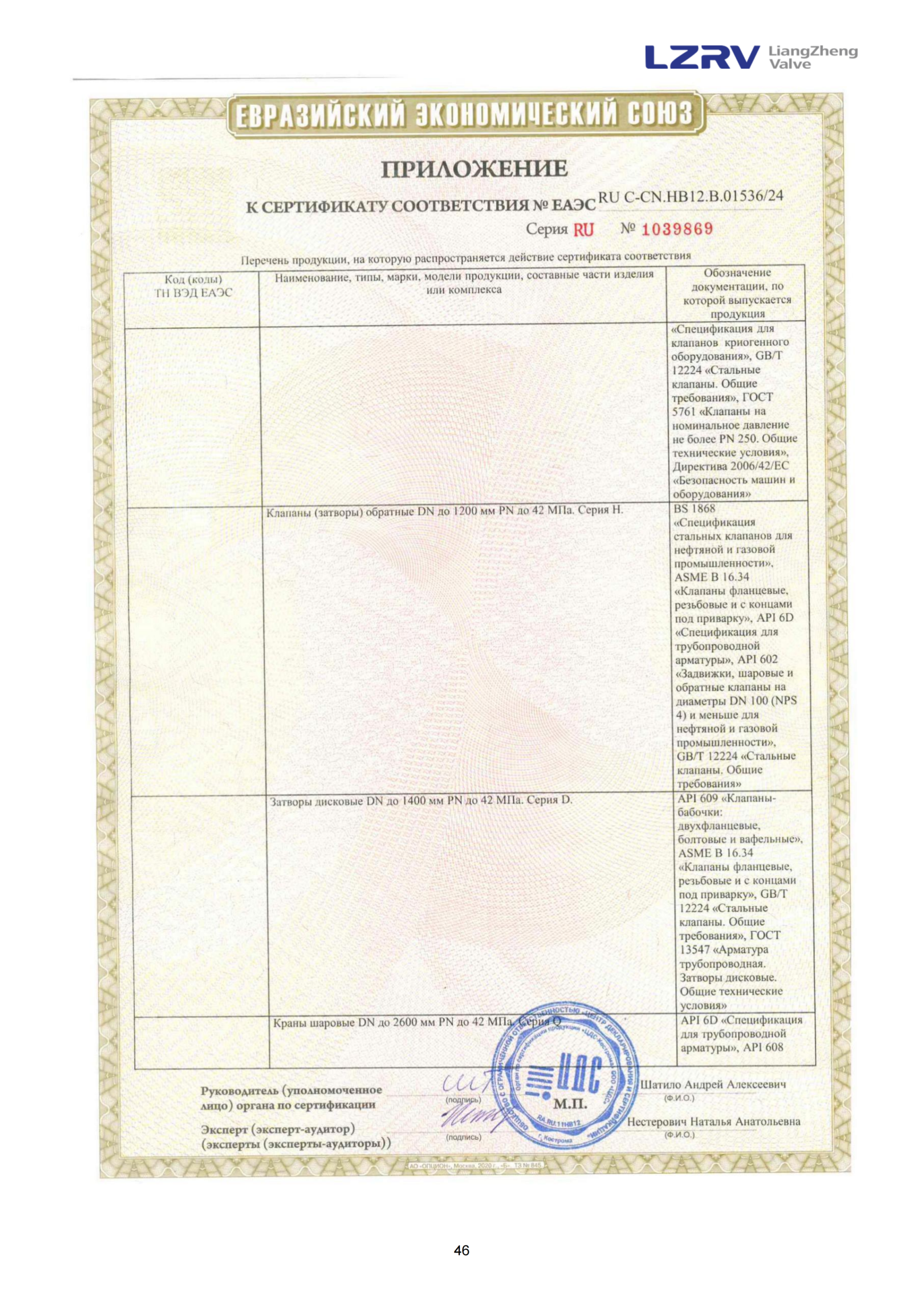
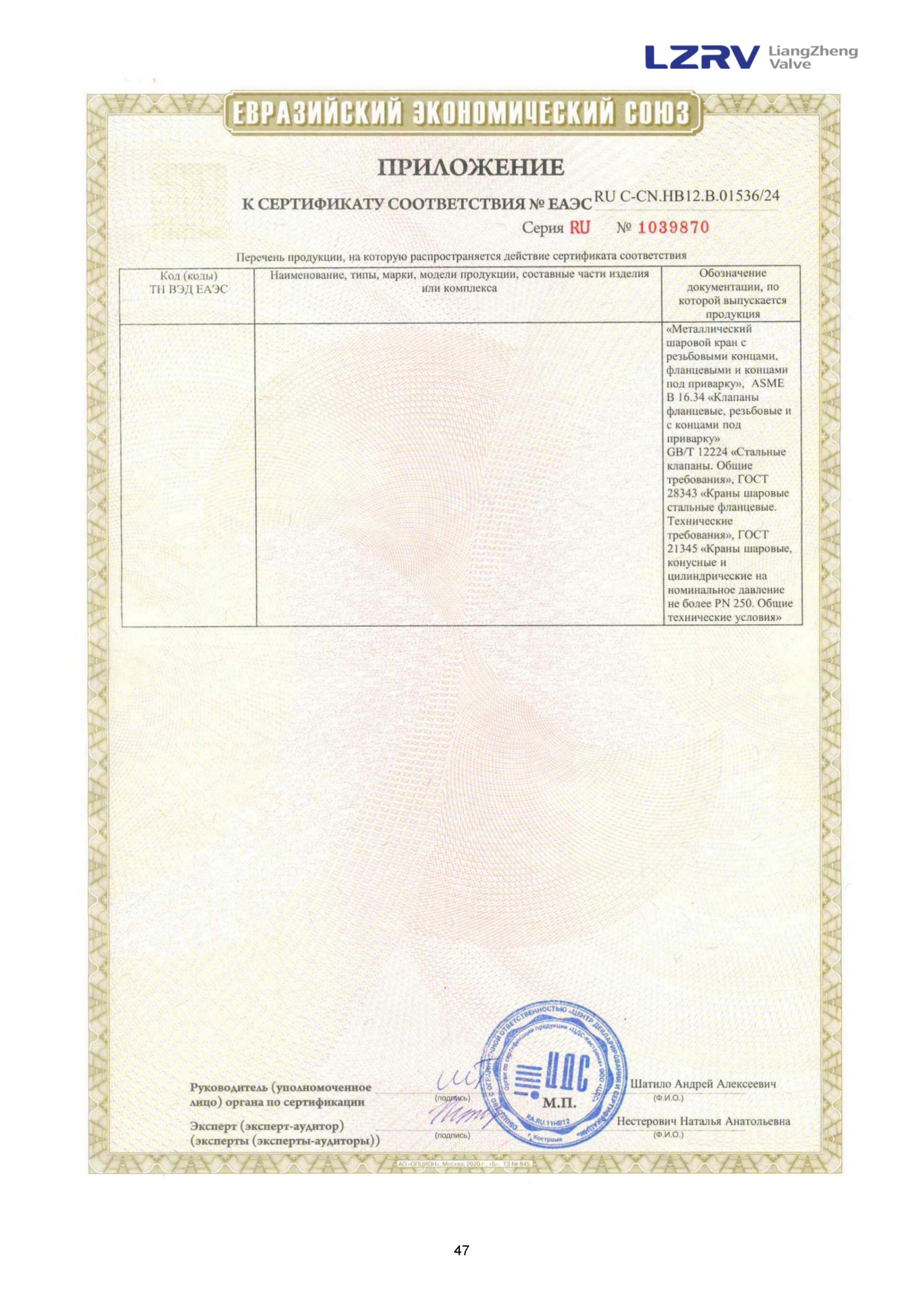
- certificate
- Main dimensions of the wafer ball valve
| SIZE | d | L | D | D1 | D2 | H | R | b | z-d1 | f |
|---|---|---|---|---|---|---|---|---|---|---|
| 1/2″ | 15 | 35 | 95 | 65 | 45 | 62 | 110 | 14 | 4-M12 | 2 |
| 3/4″ | 19 | 38 | 105 | 75 | 55 | 70 | 125 | 14 | 4-M12 | 2 |
| 1″ | 24 | 42 | 115 | 85 | 65 | 79 | 135 | 16 | 4-M12 | 2 |
| 1 1/4″ | 35 | 54 | 140 | 110 | 78 | 86 | 150 | 16 | 4-M16 | 3 |
| 1 1/2″ | 36 | 61 | 150 | 110 | 85 | 92 | 150 | 18 | 4-M16 | 3 |
| 2″ | 47 | 75 | 165 | 125 | 100 | 102 | 180 | 20 | 4-M16 | 3 |
| 2 1/2″ | 60 | 97 | 185 | 145 | 120 | 158 | 250 | 22 | 4-M16 | 3 |
| 3″ | 73 | 114 | 200 | 160 | 135 | 172 | 300 | 24 | 8-M16 | 3 |
| 4″ | 90 | 146 | 220 | 180 | 155 | 187 | 350 | 24 | 8-M16 | 3 |
| 5″ | 115 | 195 | 250 | 210 | 185 | 200 | 650 | 26 | 8-M16 | 3 |
| 6″ | 143 | 225 | 285 | 240 | 210 | 240 | 840 | 26 | 8-M20 | 3 |
| 8″ | 200 | 275 | 335 | 295 | 265 | 280 | 660 | 24 | 8-M22 | 3 |
The wafer ball valve from Longz that we use fits our pipes perfectly. Even under high-frequency switching conditions, its sealing seat maintains zero leakage, and there is no water seepage at the stem. Additionally, the operation and maintenance costs have been directly reduced by 30%
 EngineerWater Treatment Plant in Saudi Arabia
My most immediate impression of this wafer ball valve is that it is extremely lightweight and does not occupy much space in the piping system.Even in very narrow pipelines, it can be installed smoothly. After more than a year of actual use, no rust or flaking has been found inside the valve cavity of this wafer ball valve, and the switching torque is very low
 EngineerArgentine Gas Company.
Applicable media include conventional media such as water, steam, oils, and gases, as well as corrosive media like nitric acid and acetic acid, and special media such as pulp and particulate-containing slurries.
The clamp-style ball valve allows for online disassembly and replacement of sealing components. By loosening the clamp, it can be cleaned, making maintenance relatively simple. Routine inspections should be conducted regularly to check the sealing performance, stem flexibility, and wear on the valve seat. If leakage is detected, replace the sealing components promptly.
When structural conditions permit, the valve stem should be installed vertically; The valve stem should be kept vertical on horizontal pipelines.There must be no obstacles within the 90° rotation radius of the handle.The end-face sealing between the valve body and the pipeline flange depends on the flatness of the flange sealing surfaces and the condition of the gasket. Therefore, before tightening, it is essential to confirm that both sides of the pipeline flanges are flat, parallel, and free from damage.
Valve body: WCB carbon steel, CF8 (304), CF8M (316), CF3M (316L). For corrosive media, special materials such as titanium alloy can be selected.
Spheres: 2Cr13 (nitrided), 304, 316, duplex stainless steel.
Valve stem: 304/316 stainless steel or 2Cr13 (nitrided).
When the medium is highly corrosive or contains particulates, you can consult our team and specify the operating conditions during your inquiry, so our technical team can confirm the material configuration.
The typical range of nominal diameters is DN15 to DN300, with common sizes ranging from DN15 to DN200. It is recommended that the diameter not exceed DN200. The nominal pressures commonly encountered are PN1.0, PN1.6, PN2.5, PN4.0, and PN6.4 MPa, corresponding to Class 150/300. The specific bore size and pressure combination should be based on the model confirmed during the quotation process.
Advantages of Wafer Ball Valves
The structural length of a wafer ball valve is short, as it lacks a valve body flange and therefore does not require the thickness of flanges to be accounted for. The structural length is reduced to approximately only the width occupied by the ball and the seat.Under the same specifications, the wafer ball valve occupies significantly less axial space than its equivalent flanged ball valve—this is often the difference between “fitting into existing pipe galleries” and “requiring modifications to supports.”
Lighter and using fewer materials. The flanges on both sides of the wafer ball valve have been removed from the bill of materials. With the same nominal diameter and pressure rating, it has less metal inside: lighter lifting, smaller dead load borne by the pipeline gallery, and potentially fewer connection points prone to leakage.
The wafer ball valve is directly clamped between existing flanges. The valve body is equipped with through-holes and bolt holes instead of paired bolt circles, and it is clamped between two pipe flanges using long double-headed studs. No alignment with the valve flange is required; maintenance and disassembly are simply the reverse process of the same operation.
The full-bore design of the wafer ball valve means its flow resistance is nearly equivalent to that of the pipe itself. The spherical through-hole matches the internal diameter of the pipe. When fully open, the medium flows directly through without needing to change direction or take a detour. The pressure drop on both sides of the valve is close to that of straight pipe sections, which is the lowest among all types of valves.