

Oxygen shut-off valve Manufacturer in China
Oxygen does not burn. It makes everything else burn, and it does so far more readily than you might expect: the oil film a maintenance crew leaves on a thread, a burr in the bore, a stream of oxygen moving faster than the line was designed for. In an oxygen line, ordinary valve practice becomes a hazard.
Our Longz oxygen shut-off valve is built around that. The body is degreased to remove every trace of oil and grease before assembly, and sealed after cleaning so nothing recontaminates it in transit or on your site. Materials are selected against oxygen-service restrictions — no aluminium, no incompatible elastomers, no lubricants that can ignite under pressure. Internal surfaces are finished to remove the burrs and roughness that a high-velocity oxygen stream can heat to ignition. And because oxygen service is governed by velocity and pressure limits rather than by valve rating alone, we specify the valve against your actual line conditions instead of shipping a general-purpose unit with a nameplate.
What that gives you: a valve that arrives clean, stays clean, and is matched to your oxygen line’s pressure and flow — so the risk in your piping comes from your process, not from the component you bought to control it. Before you order, send us your medium, pressure, temperature, line size and flow velocity. Oxygen service is specified, not selected from a catalogue.
various types of Our oxygen shut-off valve

The oxygen-specific ball valve is characterized by its compact structure, reliable sealing, simple design, and convenient maintenance. The sealing surface and ball surface are typically in a closed state, making it resistant to erosion from media. It is easy to operate and maintain, suitable for media such as oxygen and hydrogen peroxide, and has been widely applied across various industries.

The Power Plant Shut-Off Valve is suitable for pipelines in various systems of thermal power plants, used to cut off or connect the pipeline medium. Applicable media: water, steam, and other non-corrosive media. Compared to other valve products, power station valves are characterized by high temperature and high pressure, featuring a unique self-sealing design where higher pressure results in more reliable sealing. Due to its performance technology characteristics and specific operating conditions, the product has developed unique features that other products cannot replicate.

The Expansion Discharge Valve is typically installed at the bottom of a reactor, welded to the tank bottom via a flanged flange, ensuring no residue remains during material discharge. The discharge valve can be divided into upper-extension type and lower-extension type.
Automatic pressure relief structure of oxygen shut-off valve
Our Longz oxygen shut-off valve uses a single disc with flow under the seat at PN40 and below, DN under 200 — line pressure assists opening. At DN 250 and above it uses a dual disc with flow over the seat, so line pressure assists closing instead and the operator’s closing force drops to a fraction. These valves carry an internal bypass that equalises pressure across the disc before the main seat opens. In oxygen service that matters: force at the seat is friction, friction is heat, and heat is an ignition source.

Your Trusted oxygen shut-off valve supplier in China

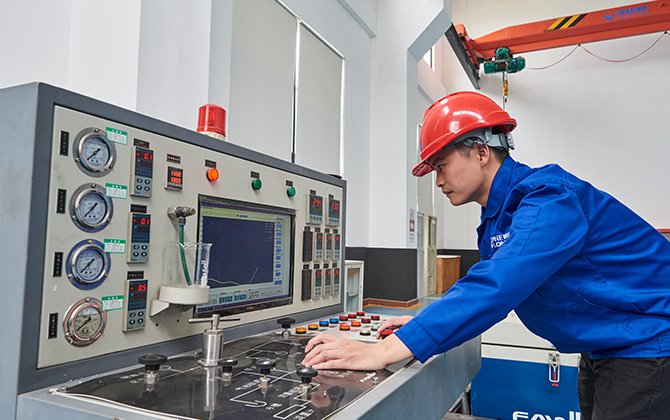
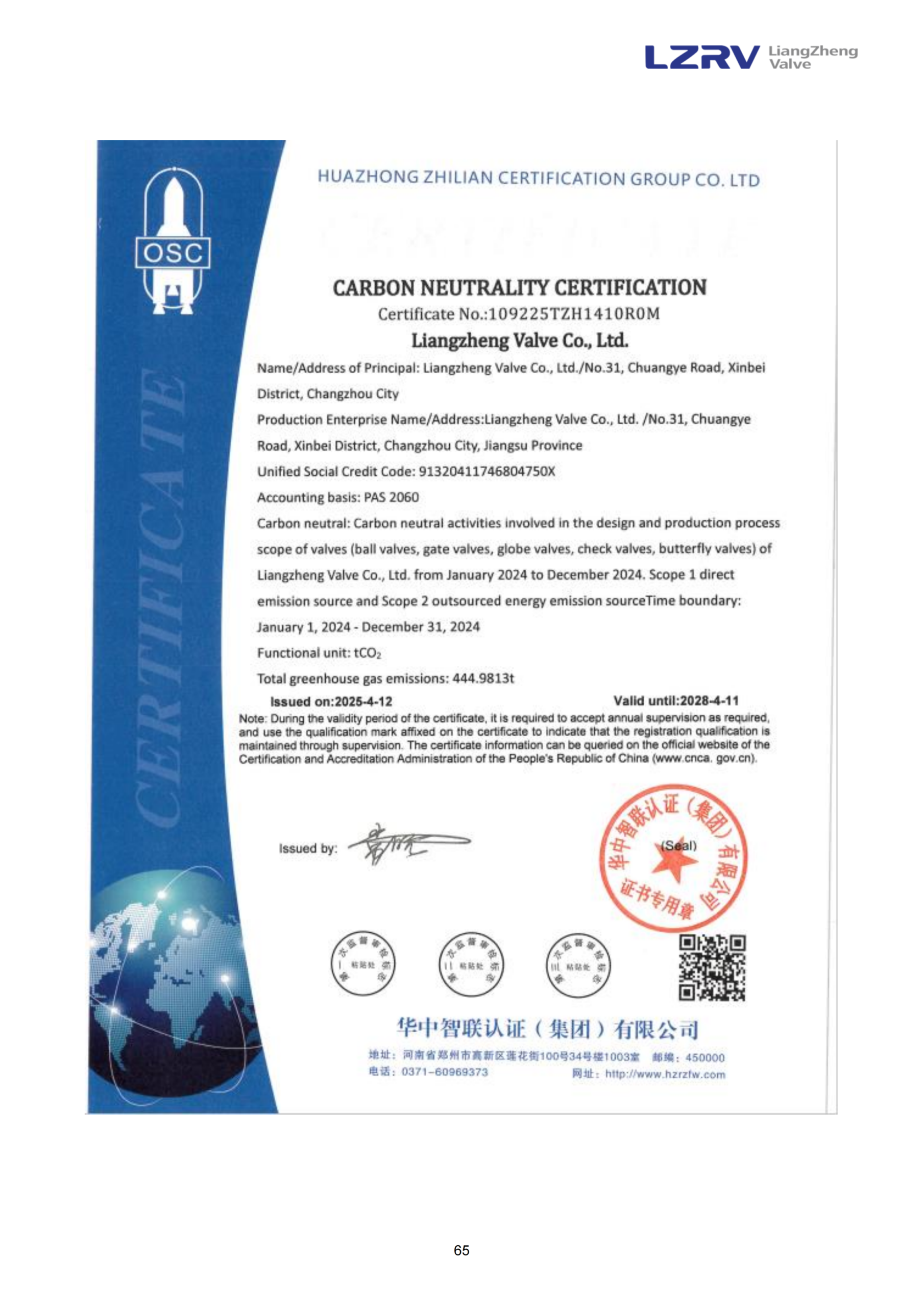
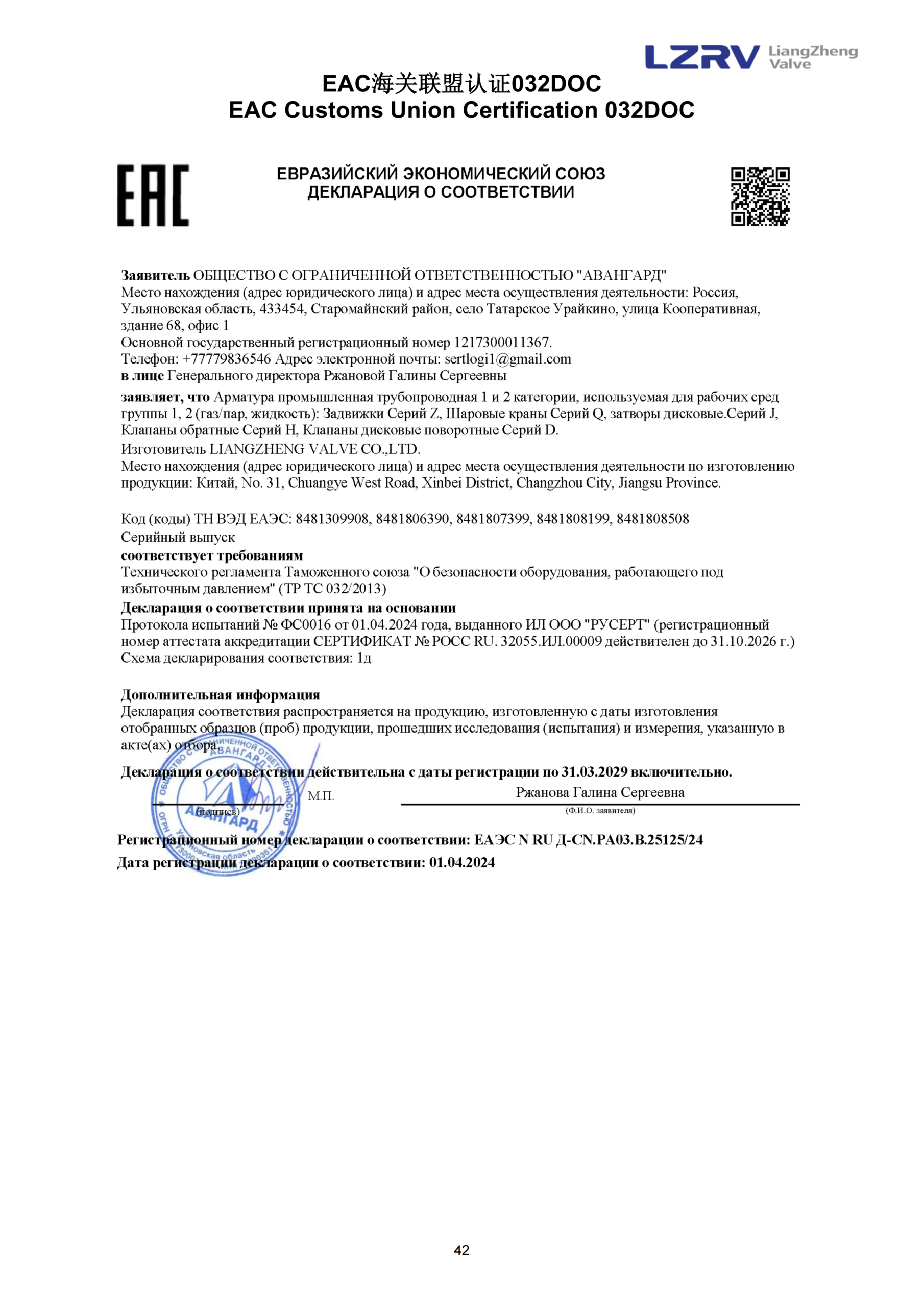
Longz has obtained ISO 9001 international quality management system certification, ISO 14001 environmental management system certification, API certification from the American Petroleum Institute, and other certificates confirming that its products meet domestic and international authoritative quality standards. The company also holds more than 50 invention patents and technology innovation patents.
Application Scenarios of Oxygen Shut-Off Valves
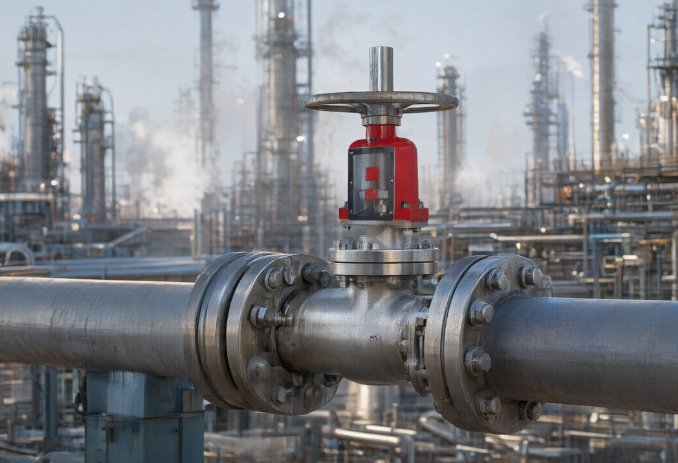
Our Longz oxygen shut-off valve is specified so the sealing faces do not slide against each other in service — they meet only at the end of the closing stroke. Nothing is abraded, so no debris enters your oxygen stream and no friction heat is generated at the seat. The seat face holds the condition it had at commissioning instead of degrading stroke by stroke, which is what keeps your leak-test results consistent over the life of the line.
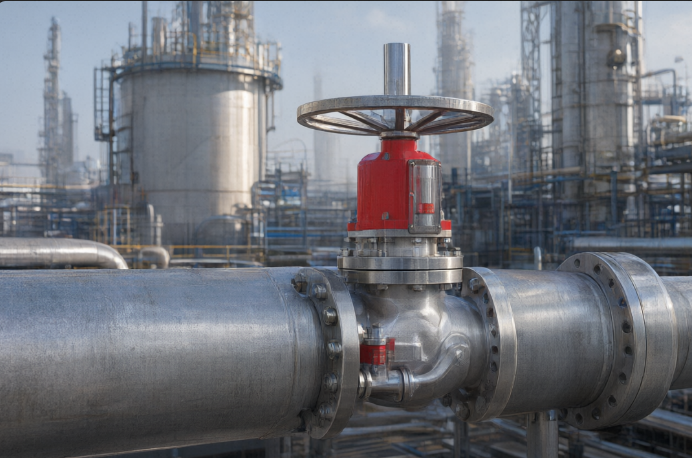
Our Longz oxygen shut-off valves undergo degreasing treatment and are sealed for protection before assembly to prevent secondary contamination. The materials are selected according to oxygen service conditions and prohibitive requirements, ensuring they do not introduce hot spots, particulate sources, or ignition paths into your piping system. Please select based on your pressure, temperature, and flow rate.
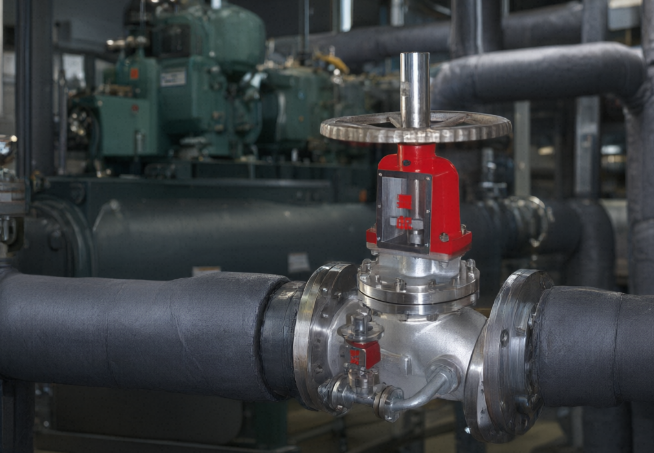
The sealing surface of my Longz oxygen shut-off valve is made from stainless steel body machining or hard alloy welding, which is resistant to wear and abrasion. It offers excellent sealing performance. During opening and closing, there is no relative sliding between the valve plug and the valve body’s sealing surface, resulting in minimal wear and abrasion. Consequently, it maintains superior sealing performance and a long service life.

- Certifications
- Technical parameters of the oxygen shut-off valve
| Nominal diameter(mm) | L | D | D1 | D2 | b-f | Z-Φd | H | D0 |
|---|---|---|---|---|---|---|---|---|
| 15 | 130 | 95 | 65 | 45 | 12-2 | 4-Φ14 | 270 | 120 |
| 20 | 150 | 105 | 75 | 55 | 14-2 | 4-Φ14 | 280 | 120 |
| 25 | 160 | 115 | 85 | 65 | 14-2 | 4-Φ14 | 290 | 140 |
| 32 | 180 | 135 | 100 | 78 | 16-2 | 4-Φ18 | 320 | 160 |
| 40 | 200 | 145 | 110 | 85 | 18-3 | 4-Φ18 | 360 | 180 |
| 50 | 230 | 160 | 125 | 100 | 18-3 | 4-Φ18 | 400 | 220 |
| 65 | 290 | 180 | 145 | 120 | 20-3 | 4-Φ18 | 470 | 240 |
| 80 | 310 | 195 | 160 | 135 | 20-3 | 4-Φ18 | 520 | 280 |
| 100 | 350 | 215 | 180 | 155 | 22-3 | 8-Φ18 | 570 | 280 |
| 125 | 400 | 245 | 210 | 185 | 24-3 | 8-Φ18 | 620 | 350 |
| 150 | 480 | 280 | 240 | 210 | 24-3 | 8-Φ23 | 670 | 350 |
| 200 | 600 | 335 | 295 | 265 | 24-3 | 8-Φ23 | 750 | 450 |
| 250 | 650 | 390 | 350 | 320 | 26-3 | 12-Φ23 | 810 | 500 |
| 300 | 750 | 440 | 400 | 368 | 26-3 | 12-Φ23 | 930 | 550 |
| 350 | 850 | 500 | 460 | 428 | 26-3 | 16-Φ23 | 1020 | 600 |
| 400 | 950 | 565 | 515 | 482 | 26-3 | 16-Φ26 | 1100 | 600 |
| 450 | 1050 | 615 | 565 | 532 | 28-3 | 20-Φ26 | 1190 | 700 |
| 500 | 1150 | 670 | 620 | 585 | 28-3 | 20-Φ26 | 1240 | 700 |
| 600 | 1350 | 780 | 725 | 685 | 34-3 | 20-Φ30 | 1340 | 800 |
| 700 | 1450 | 895 | 840 | 800 | 34-3 | 24-Φ30 | 1420 | 900 |
| 800 | 1650 | 1010 | 950 | 905 | 36-3 | 24-Φ34 | 1720 | 1000 |
“We have been using Longz’s oxygen shut-off valve for eight months, enduring multiple extreme weather conditions. Upon inspection, the internal sealing gasket showed virtually no wear, and there was no leakage after shutdown.”
 EngineerFrench Petroleum Company
Last year, we purchased this batch of oxygen shut-off valves in bulk. They have been in operation for a full 18 months without any leaks, and their automatic pressure relief feedback function has proven particularly effective.
 Procurement DepartmentSaudi Chemical Company
The oxygen shut-off valve is a specialized valve designed specifically for oxygen pipeline systems, used to connect or isolate oxygen media. It serves as a critical safety component in oxygen distribution networks, air separation units, medical oxygen systems, and other related applications. Due to oxygen’s strong combustion-promoting properties, oxygen shut-off valves are specifically designed in terms of material, sealing structure, degreasing/oil-free requirements, and anti-static features according to the special safety standards for oxygen. They cannot be interchangeably used with ordinary shut-off valves.
Consistent Flow Direction: The arrow indicating the media flow direction on the valve body should match the actual flow direction in the pipeline.
Installation orientation: The valve stem should be installed vertically upward to ensure smooth operation.
Gasket selection: For flange gaskets, polytetrafluoroethylene (PTFE) or metal-wrapped gaskets are recommended.
Safety Protection: Valves should be kept away from open flames and oil stains, installed in areas that do not generate sparks, and equipped with reliable grounding devices.
Cleanliness Requirements: After assembly and pressure testing, the valve passages should be degreased again, with clear no-oil markings maintained. Large-diameter valves should have reinforced support.
Valves should be operated slowly, and when operating manually, stand to the side of the valve. It is strictly prohibited to use the oxygen shut-off valve as a regulating valve. Operating tools, work clothes, gloves, etc., must be clean and free of oil or grease. For manual valves with a nominal diameter of DN200 or larger, measures should be taken to reduce the pressure difference before opening or closing the main valve.
Stricter material requirements: Pressure-bearing components shall be made of low-carbon or ultra-low-carbon austenitic stainless steel or copper alloys; for high-pressure, high-purity oxygen applications, use Monel or Inconel (nickel-based alloys such as Monel and Inconel. Titanium alloys are prohibited.
Equipped with anti-static devices: The valve body is fitted with a grounding device to eliminate static sparks generated during the switching process.
Special sealing structure: Gasket packing must not use materials prone to shedding debris, fibers, or flammable substances. The internal components require a high surface finish.
Small-bore T-shaped globe valves typically adopt a low-inlet-high-outlet configuration (where the medium enters from below the disc and exits from above); For medium and large-caliber globe valves, to ensure proper stress distribution on the valve stem and rapid closure of the valve plug, an “inlet at the top, outlet at the bottom” (high inlet, low outlet) configuration is adopted. During installation, carefully verify according to the flow direction arrow marking on the valve body.
Oil-Free, Anti-Static Oxygen Shut-Off Valve with External Bypass for High-Pressure Oxygen Service
For the nominal pressure PN26.3 MPa and nominal diameter DN250~500, an external bypass valve structure is adopted. The purpose is to reduce the pressure difference before and after the valve, thereby avoiding high flow rates, excessive erosion, and preventing the generation of high temperatures. This ensures the safe operation of the oxygen pipeline network while also reducing the operating torque. The bracket section adopts a fully enclosed structure, and when compressing the packing material, the protective cover on the bracket can be opened, serving as an oil and dust barrier. It also has a clear no-oil marking. The stem of the Oxygen Shut-Off Valve is equipped with a dust-proof device at its upper part. All components in contact with oxygen undergo rigorous degreasing and oil-free treatment before assembly. The packing and gasket materials are made of polytetrafluoroethylene (PTFE), ensuring safe and reliable sealing during operation. The oxygen shut-off valve is equipped with an anti-static safety device to prevent sparks caused by static electricity. The valve body flange of the OXYGEN SHUT-OFF VALVE is equipped with grounding screws, which directly discharge static electricity from the valve via conductive wires, ensuring the safety of valve operation.