
Industrial ball valves serve oil and gas pipelines, chemical plants and power stations, often under high pressure, wide temperature swings and corrosive media. The wrong material choice leads to corrosion, premature wear, sealing failure and unplanned maintenance costs, so material selection directly determines a valve’s reliability, safety and service life. Common grades include cast carbon steel WCB and WCC, forged carbon steel A105, low-temperature LCB, LCC and LF2, and stainless steels 304 and 316 — each with distinct mechanical properties and manufacturing standards. This guide compares them, covers materials for individual valve components, and explains how to match the right combination to your operating conditions.
1. What Materials Are Commonly Used in Industrial Ball Valves?
Industrial ball valves are manufactured using different metal materials to meet specific pressure, temperature, and corrosion-resistance requirements. The most common choices include carbon steel, low-temperature carbon steel, and stainless steel.
Understanding their properties and applicable standards helps engineers and buyers select suitable materials for their pipeline systems.
1.1 WCB – ASTM A216 Cast Carbon Steel
WCB is one of the most commonly used cast carbon steel grades for industrial valve bodies. It is specified under ASTM A216 and is widely used in pressure-containing cast steel components.
WCB offers good mechanical strength and is suitable for many general industrial applications where carbon steel provides sufficient resistance to the operating environment.
Key characteristics:
Cast carbon steel material for pressure-containing components.
Good mechanical properties for general industrial service.
Suitable for a wide range of conventional industrial applications.
Generally more economical than stainless steel and special alloys.
Requires additional corrosion protection or a different material where the service environment demands it.
Typical industrial applications:
Oil and gas pipelines.
Natural gas processing systems.
Industrial water and utility pipelines.
General process pipelines.
Steam and power utility systems within applicable pressure and temperature limits.
If your pipeline operates under conventional industrial conditions without particularly demanding corrosion or low-temperature requirements, WCB may be a cost-effective option.
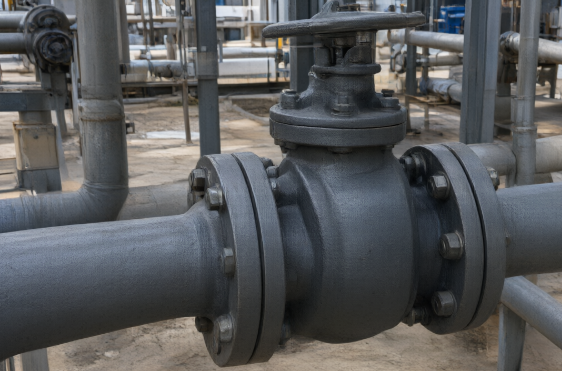
1.2 WCC – ASTM A216 Cast Carbon Steel
WCC is another cast carbon steel grade covered by ASTM A216. Like WCB, it is used for pressure-containing cast steel components, including industrial valve bodies.
Although WCB and WCC belong to the same material specification, they have different specified mechanical property requirements. The selection should therefore be based on the applicable material specification, design conditions, and project requirements rather than assuming that one grade is universally better.
Key characteristics:
Cast carbon steel material.
Used for pressure-containing valve components.
Subject to specified chemical composition and mechanical property requirements.
Requires consideration of the applicable design code and material documentation.
Typical industrial applications:
Oil and gas facilities
Industrial process pipelines.
General pressure-containing valve components.
Utility and energy systems.
When selecting WCC, confirm that the material grade meets the required mechanical properties and project specifications.
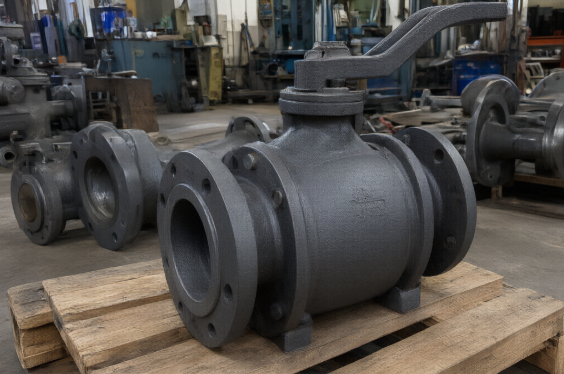
1.3 A105 – ASTM A105 Forged Carbon Steel
A105 is a forged carbon steel material specified under ASTM A105. It is commonly used for pressure-containing components in industrial piping systems, including forged valve bodies, bonnets, flanges, and fittings.
The main difference between A105 and WCB is their manufacturing form. A105 is a forged material, while WCB is a cast material. They are therefore manufactured and specified under different ASTM standards.
Key characteristics:
Forged carbon steel material.
Commonly used for pressure-containing piping components.
Suitable for applications requiring forged construction.
Good mechanical properties for applicable industrial service.
Limited corrosion resistance compared with stainless steel.
Typical industrial applications:
Forged steel ball valve.
High-pressure industrial piping systems.
Oil and gas equipment.
Pressure-containing forged components.
Industrial process systems requiring forged construction.
If your project specification requires forged carbon steel components, A105 may be an appropriate choice. The final selection should also consider design pressure, temperature, component dimensions, and the applicable valve standard.
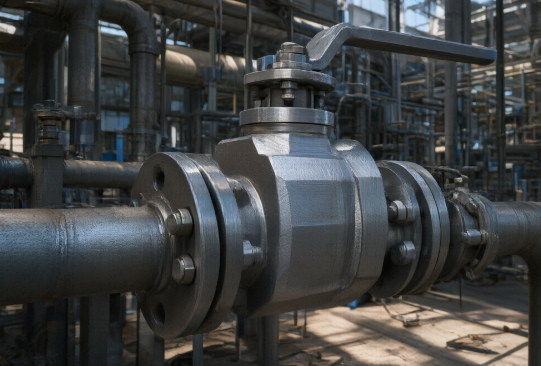
1.4 LCB – ASTM A352 Cast Low-Temperature Carbon Steel
LCB is a cast low-temperature carbon steel grade specified under ASTM A352. It is designed for applications where low-temperature toughness is an important material requirement.
Compared with conventional carbon steel grades, LCB is intended for specified low-temperature service when manufactured, tested, and accepted according to the relevant requirements.
Key characteristics:
Cast low-temperature carbon steel.
Designed for specified low-temperature applications.
Requires consideration of impact toughness requirements.
Suitable for pressure-containing cast components in applicable service conditions.
Typical industrial applications:
Low-temperature oil and gas pipelines.
Natural gas processing facilities.
Refrigeration and industrial cooling systems.
Process pipelines operating in cold environments.
When selecting LCB, check the minimum design metal temperature, required impact testing, and applicable pressure-temperature limits.
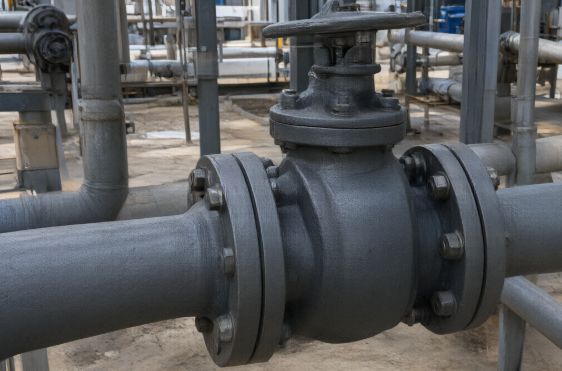
1.5 LCC – ASTM A352 Cast Low-Temperature Carbon Steel
LCC is another low-temperature cast carbon steel grade specified under ASTM A352. It is used in industrial applications where the material must meet specified mechanical and impact toughness requirements at low temperatures.
Although LCB and LCC belong to the same ASTM material specification, they have different specified material requirements. The correct grade should be selected according to the design code and project documentation.
Key characteristics:
Cast low-temperature carbon steel.
Used for pressure-containing components.
Requires verification of impact testing and material properties.
Suitable for specified low-temperature industrial service.
Typical industrial applications:
Low-temperature process pipelines.
Oil and gas facilities.
Industrial gas systems.
Pressure-containing cast steel valve components.
Do not select LCC based only on the general term “low-temperature steel.” Always verify the specified impact test temperature and minimum design metal temperature.
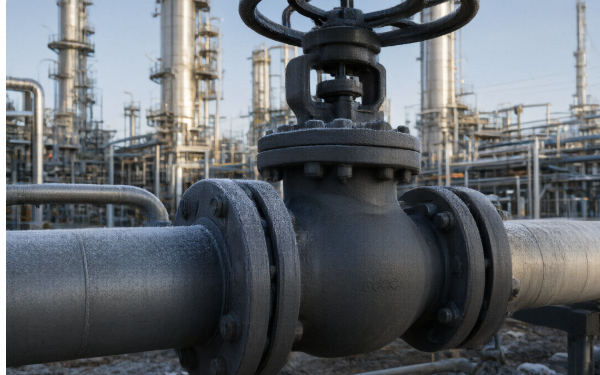
1.6 LF2 – ASTM A350 Forged Low-Temperature Carbon Steel
LF2 is a forged low-temperature carbon steel material specified under ASTM A350. It is commonly used for forged pressure-containing components in piping systems.
Compared with conventional forged carbon steel, LF2 is designed to meet specified low-temperature mechanical and impact toughness requirements.
Key characteristics:
Forged low-temperature carbon steel.
Suitable for specified low-temperature pressure applications.
Requires verification of material class and impact test requirements.
Used for forged piping and valve components.
Typical industrial applications:
Low-temperature oil and gas systems.
Natural gas processing equipment.
Low-temperature pressure piping.
Forged valve bodies and other pressure-containing components.
When selecting LF2, confirm the required material class, impact testing, and minimum design temperature. For cryogenic service, verify that the selected material and complete valve assembly are qualified for the actual design temperature.
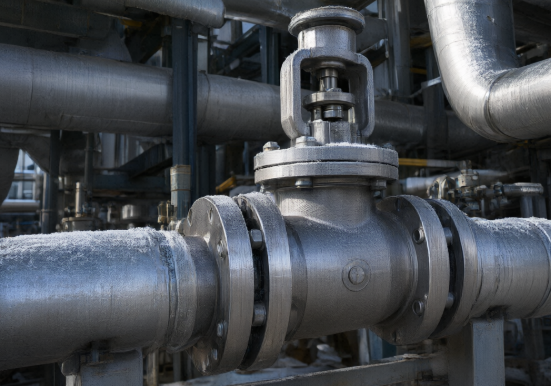
1.7 304 Stainless Steel – ASTM A182 F304 / ASTM A351 CF8
304 stainless steel is a widely used austenitic stainless steel grade. It offers good general corrosion resistance and is suitable for many industrial environments where carbon steel does not provide sufficient corrosion resistance.
For industrial valve components, the material designation depends on the manufacturing process.
ASTM A182 F304: forged or wrought stainless steel material.
ASTM A351 CF8: cast stainless steel material commonly associated with 304 stainless steel.
These designations are related but should not be treated as identical material specifications.
Key characteristics:
Good general corrosion resistance.
Suitable for many industrial process environments.
Good resistance to oxidation in applicable service conditions.
Commonly used for valve bodies and internal components.
Not suitable for every chloride-containing or highly corrosive environment.
Typical industrial applications:
General chemical processing.
Industrial water treatment.
Food and beverage processing equipment.
Chemical and process pipelines.
Industrial systems requiring stainless steel components.
304 stainless steel is a common option when carbon steel does not provide adequate corrosion resistance. However, the actual suitability depends on the medium, temperature, concentration, and operating conditions.
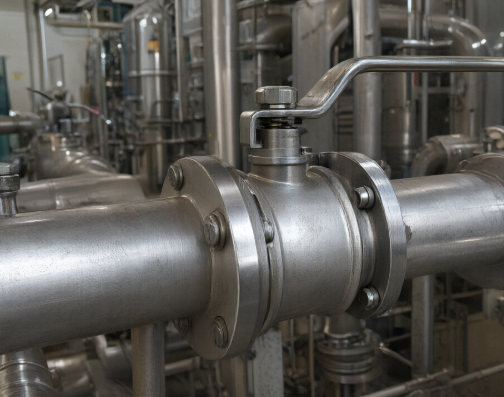
1.8 316 Stainless Steel – ASTM A182 F316 / ASTM A351 CF8M
316 stainless steel is an austenitic stainless steel containing molybdenum. Compared with 304, it generally offers improved resistance to pitting and crevice corrosion in certain chloride-containing environments.
For industrial valve components, the common material designations include:
ASTM A182 F316: forged or wrought stainless steel material.
ASTM A351 CF8M: cast stainless steel material commonly associated with 316 stainless steel.
Like F304 and CF8, these grades belong to different product forms and material specifications.
Key characteristics:
Good general corrosion resistance.
Improved resistance to certain pitting and crevice corrosion conditions compared with 304.
Suitable for selected chemical and industrial environments.
Commonly used for valve bodies, balls, stems, and other components.
Typical industrial applications:
Chemical processing systems.
Selected marine-related applications.
Industrial pipelines carrying certain corrosive fluids.
Process systems requiring enhanced corrosion resistance.
However, 316 stainless steel is not suitable for every seawater or chloride application. Actual suitability depends on chloride concentration, temperature, flow conditions, crevice conditions, and the risk of stress corrosion cracking.
For more demanding environments, duplex stainless steel or special alloys may need to be evaluated.
2. How Do Different Industrial Ball Valve Materials Compare?
Knowing the material names is not enough. Engineers and buyers also need to understand their manufacturing forms, material characteristics, and typical applications.
The following table provides a general comparison of commonly used industrial ball valve materials.
Material Material Specification Manufacturing Form Main Consideration
WCB ASTM A216 Cast General industrial carbon steel service
WCC ASTM A216 Cast Cast carbon steel pressure-containing components
A105 ASTM A105 Forged Forged carbon steel pressure-containing components
LCB ASTM A352 Cast Low-temperature cast steel service
LCC ASTM A352 Cast Low-temperature cast steel service
LF2 ASTM A350 Forged Low-temperature forged steel components
304 ASTM A182 F304 / ASTM A351 CF8 Forged / Cast General corrosion resistance
316 ASTM A182 F316 / ASTM A351 CF8M Forged / Cast Improved resistance to certain chloride-related corrosion
Cast Steel vs. Forged Steel
One important consideration when selecting industrial ball valve materials is the manufacturing process.
Cast steel materials, such as WCB, WCC, LCB, LCC, CF8, and CF8M, are produced through casting processes. Molten metal is poured into a mold to form the required component shape.
Casting is widely used for complex valve body geometries and different valve sizes.
Forged steel materials, such as A105, LF2, F304, and F316, are produced through forging processes. The metal is shaped under compressive forces to achieve the required component dimensions and properties.
Forging is commonly used for forged valve bodies, flanges, and other pressure-containing components.
Neither manufacturing process is universally better. The choice depends on valve design, component size, material requirements, applicable standards, and project specifications.
3. What Factors Should You Consider When Selecting Industrial Ball Valve Materials?
Selecting the right industrial ball valve material requires more than identifying the pipeline medium. You should evaluate the complete operating environment and the requirements of the valve assembly.
3.1 What Medium Will Flow Through Your Pipeline?
Start by identifying the fluid or gas flowing through the pipeline.
Different media can have different effects on valve materials. Common industrial media include:
Natural gas.
Crude oil.
Refined petroleum products.
Industrial water.
Steam.
Chemical fluids.
Gas mixtures.
Slurry and particle-containing fluids.
For example:
– Natural Gas: Check for moisture, H₂S and CO₂, as these can increase corrosion risks and may require sour-service material evaluation.
– Crude Oil: Consider water content, salt, H₂S, CO₂ and sand particles, which can cause corrosion and erosion.
– Seawater: Pay particular attention to chloride-induced pitting and crevice corrosion.
– Steam: Check operating temperature, pressure and thermal cycling, as these affect both valve body and sealing materials.
– Chemical Media: Confirm the chemical composition, concentration and temperature before selecting wetted materials.
– Slurry: Evaluate particle size, hardness and flow velocity to reduce wear on the ball and seats.
3.2 What Are Your Operating Temperature and Pressure?
Operating temperature and pressure directly affect material selection and valve design.
For low-temperature applications, material toughness and impact testing are important. The selected material must satisfy the minimum design metal temperature requirements.
For high-temperature applications, you should evaluate:
Material allowable stress.
Pressure-temperature ratings.
Thermal expansion.
Seat and seal temperature limits.
Packing and gasket compatibility.
Do not select a valve based only on its nominal pressure class. The actual operating temperature, design pressure, and applicable design standard must also be considered.
3.3 What Seat and Sealing Materials Do You Need?
The valve body material is only one part of the selection process. Seat and sealing materials also affect valve performance, sealing reliability, and service life.
Common industrial ball valve seat materials include:
PTFE.
Reinforced PTFE (RPTFE).
PEEK.
Nylon.
Metal seats.
Common packing and sealing materials include:
PTFE.
Graphite.
NBR.
EPDM.
FKM.
For example, PTFE is commonly used where chemical compatibility and tight shut-off are important. PEEK may be considered for applications involving higher temperatures or mechanical demands. Metal seats may be suitable for certain high-temperature, abrasive, or severe-service applications.
The final selection should consider medium compatibility, temperature, pressure, leakage requirements, and valve design.
3.4What Are Your Maintenance and Lifecycle Cost Requirements?
A lower initial purchase price does not always mean a lower overall cost.
For example, WCB ball valves are generally more economical for suitable non-corrosive services. However, if the medium contains corrosive components, an unsuitable carbon steel valve may require frequent maintenance or replacement. In such conditions, upgrading to 316 stainless steel or another corrosion-resistant material may reduce long-term maintenance costs.
Similarly, selecting an appropriate low-temperature material, such as LCB or LF2, can help avoid premature failure in low-temperature applications.
To identify the most cost-effective option, compare:
Initial Purchase Cost: The price difference between material options.
Maintenance Cost: Expected inspection, repair, and replacement expenses.
Service Life: How long the valve can operate under actual working conditions.
Downtime Cost: Potential production losses caused by valve failure or replacement.
The best choice is not necessarily the cheapest or most expensive material. It is the material that meets your operating requirements while minimizing the total cost over the valve’s service life.
4. What Materials Are Used for Different Industrial Ball Valve Components?
An industrial ball valve consists of several components, and they do not necessarily use the same material.
The valve body, ball, stem, seats, packing, and bolting each have different functional requirements. Their materials should be selected according to the valve design and operating conditions.
Valve Component Common Material Options Main Function
Valve Body WCB, WCC, LCB, LCC, CF8, CF8M Pressure containment
Ball 304, 316, CF8, CF8M, alloy materials Flow control and shut-off
Stem F6a, 304, 316, 17-4PH, alloy steel Transmits operating torque
Seat PTFE, RPTFE, PEEK, metal Provides sealing against the ball
Packing PTFE, graphite Prevents external leakage around the stem
Gasket Graphite-based and other compatible materials Seals static connections
Bolting ASTM A193 B7, B8, B8M; ASTM A194 2H, 8, 8M Connects pressure-containing components
Valve Body Materials
The valve body is the main pressure-containing component. Common materials include WCB, WCC, LCB, LCC, CF8, and CF8M.
The selection depends on pressure, temperature, corrosion resistance, manufacturing requirements, and applicable valve standards.
Ball Materials
The ball controls the flow of the medium through the valve. Common materials include stainless steel, carbon steel, and selected alloy materials.
Depending on the application, the ball may also receive surface treatments or coatings to improve wear or corrosion performance.
Stem Materials
The stem transmits operating torque from the actuator or handle to the ball. Common options include F6a, 304, 316, and 17-4PH, depending on the design and operating requirements.
Seat Materials
The seat provides the sealing interface between the ball and valve body.
Soft-seat materials such as PTFE and RPTFE are widely used in many industrial applications. PEEK may be considered for more demanding mechanical or temperature conditions, while metal seats are used in selected severe-service applications.
Packing and Sealing Materials
Packing and seals help prevent external leakage and maintain sealing performance.
PTFE and graphite are common packing options. Elastomeric materials such as NBR, EPDM, and FKM may be used for specific sealing applications, depending on the medium and temperature.
Bolting Materials
Bolting connects the valve body, bonnet, and other structural components.
Common material specifications include ASTM A193 B7, B8, and B8M for bolting, together with ASTM A194 2H, 8, and 8M for nuts.
The appropriate combination depends on the design code, temperature, corrosion conditions, and project requirements.
5. What Is the Difference Between WCB and A105?
WCB and A105 are both carbon steel materials commonly used in industrial valve and piping applications. However, they differ in manufacturing processes and applicable material standards.
WCB is a cast carbon steel grade specified under ASTM A216, while A105 is a forged carbon steel grade specified under ASTM A105.
Comparison WCB A105
Material Standard ASTM A216 ASTM A105
Material Type Carbon steel Carbon steel
Manufacturing Form Cast Forged
Common Applications Cast valve bodies and pressure-containing components Forged valve bodies, flanges, and fittings
Selection Considerations Casting design, material properties, pressure and temperature requirements Forging requirements, material properties, pressure and temperature requirements
The main difference is the manufacturing form and applicable specification, not simply the strength of the material.
Neither material is universally better. Your selection should depend on valve construction, operating conditions, component design, applicable standards, and project requirements.
6. Ball Valve Materials for Different Industrial Applications
Different industrial sectors have different operating conditions. Therefore, material selection should be based on the actual application rather than relying on a single material recommendation for an entire industry.
6.1 Oil and Gas Pipelines
Oil and gas pipelines may operate under different pressures, temperatures, and fluid compositions.
WCB is commonly considered for general carbon steel valve bodies, while A105 may be used for forged pressure-containing components.
For low-temperature service, LCB, LCC, or LF2 may be considered, depending on whether the component is cast or forged and the required impact toughness.
For corrosive or sour service, the material selection must account for fluid composition, hydrogen sulfide content, and the applicable material requirements.
6.2 Natural Gas Transmission
Natural gas transmission systems require reliable valves that meet the specified pressure, temperature, and pipeline design requirements.
Carbon steel materials such as WCB and A105 are common candidates for applicable industrial valve designs. Low-temperature materials may be required where the operating environment or process conditions demand them.
For natural gas applications, material selection should also consider the valve’s pressure rating, sealing design, fugitive emissions requirements, applicable pipeline standards, and project specifications.
6.3 Chemical Processing
Chemical processing facilities handle a wide range of fluids with different chemical compositions and concentrations.
Carbon steel may be suitable for certain non-corrosive services, while 304 or 316 stainless steel may be considered where improved corrosion resistance is required.
For more aggressive chemicals, duplex stainless steel or special alloys may be necessary.
The material selection should be based on chemical compatibility, concentration, operating temperature, and potential corrosion mechanisms.
6.4 Power Generation
Power generation facilities use industrial valves in steam, water, fuel, and auxiliary systems.
Carbon steel materials may be used in suitable utility and process applications, while stainless steel materials may be selected where corrosion resistance or specific operating conditions require them.
For steam and high-temperature applications, the valve material, pressure-temperature rating, seat, packing, and gasket materials must all be checked against the actual service conditions.
6.5 Low-Temperature Industrial Applications
Low-temperature applications require careful consideration of material toughness and impact resistance.
LCB and LCC are cast low-temperature carbon steel grades, while LF2 is a forged low-temperature carbon steel grade.
The correct selection depends on the component manufacturing form, minimum design metal temperature, impact test requirements, and applicable design standards.
For cryogenic applications, the entire valve assembly, including the body, ball, stem, seat, seals, and packing, must be suitable for the specified temperature range.
7. FAQ
What Is the Most Common Material for Industrial Ball Valves?
WCB is a commonly used material for industrial ball valve bodies because it provides suitable mechanical properties for many general industrial applications. However, the most appropriate material depends on the medium, operating temperature, pressure, corrosion conditions, and project specifications.
Is WCB or A105 Better for Industrial Ball Valves?
Neither material is universally better. WCB is a cast carbon steel grade specified under ASTM A216, while A105 is a forged carbon steel grade specified under ASTM A105. The selection depends on valve construction, component requirements, and project specifications.
What Is the Difference Between LCB and LF2?
Both are low-temperature carbon steel materials, but they have different manufacturing specifications. LCB is a cast steel grade specified under ASTM A352, while LF2 is a forged steel grade specified under ASTM A350. The appropriate grade depends on component design, minimum design temperature, and impact test requirements.
Is 316 Stainless Steel Better Than 304 for Ball Valves?
316 stainless steel generally offers improved resistance to pitting and crevice corrosion in certain chloride-containing environments because it contains molybdenum. However, it is not automatically suitable for every corrosive or seawater application. Actual conditions must be evaluated before selecting the material.
What Is the Difference Between CF8 and CF8M?
CF8 and CF8M are cast stainless steel grades specified under ASTM A351. CF8 is commonly associated with 304 stainless steel, while CF8M is commonly associated with 316 stainless steel. CF8M contains molybdenum, which generally improves resistance to certain forms of corrosion.
Which Material Is Suitable for Low-Temperature Ball Valves?
LCB, LCC, and LF2 are common low-temperature carbon steel grades used in industrial valve applications. LCB and LCC are cast materials under ASTM A352, while LF2 is a forged material under ASTM A350. The final selection must meet the specified minimum design metal temperature and impact testing requirements.
Can WCB Ball Valves Be Used for Natural Gas?
WCB ball valves can be used in natural gas applications when the valve design, material specifications, pressure-temperature rating, sealing system, and applicable project requirements are satisfied. Additional requirements may apply depending on pipeline service conditions and relevant standards.
Can I Request a Customized Industrial Ball Valve Material Configuration?
Yes. Depending on the manufacturer’s capabilities and applicable standards, industrial ball valves can be configured with different body, ball, stem, seat, packing, and bolting materials.The final configuration should be confirmed according to the medium, temperature, pressure, corrosion conditions, and project specifications.
Conclusion
Selecting the right material is an important part of industrial ball valve engineering. WCB, WCC, A105, LCB, LCC, LF2, 304, and 316 stainless steel each have different material properties, manufacturing forms, and application requirements.
Before making a selection, evaluate the operating medium, temperature, pressure, corrosion conditions, valve component materials, and applicable standards. A suitable material configuration should meet the technical requirements of the entire valve assembly, not just the valve body.
If you are looking for industrial ball valves for oil and gas, natural gas transmission, chemical processing, or other industrial applications, contact LONGZ with your technical requirements. Our team can help evaluate suitable valve configurations for your project.